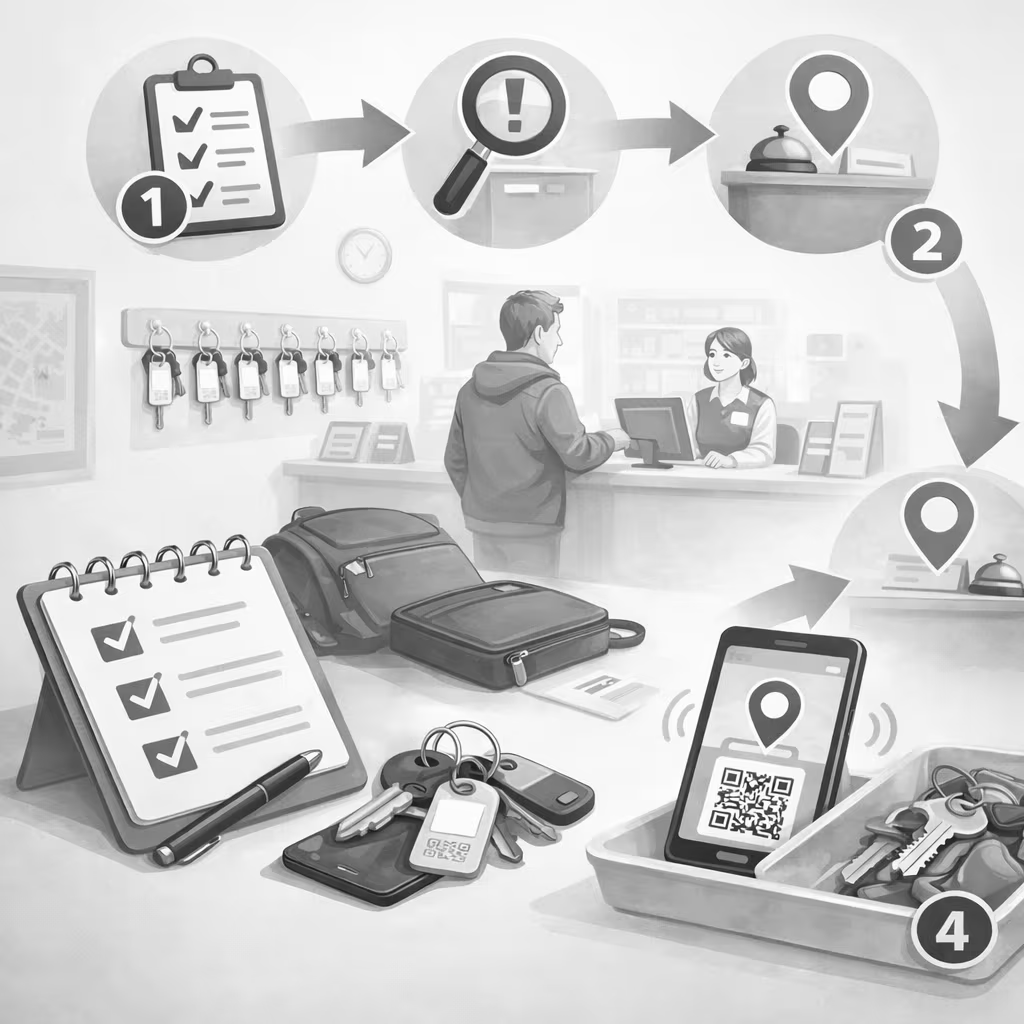
When something goes missing, many people’s first reaction is to launch a frantic search. This is normal, but it often takes up precisely the time when a properly organised loss report would be most effective. If you pause for a moment, gather the key details and contact the right organisation, you’ll have a much better chance of your lost item turning up again.
This applies equally to keys, wallets, rucksacks, documents or electronic devices. Not every lost property office operates in the same way, but the same sequence almost always helps: narrow down the location, document the loss, contact the relevant lost property office and follow up realistically.
1. Make the most of the first five minutes
Before you ring anywhere, make a note of three things: what’s missing, where you last knew it was safe, and when you realised it was missing. These three details turn a vague hunch into a useful report of the loss.
It’s also helpful to note distinguishing features such as colour, brand, stickers, tags, a cover or any special contents. For bags and rucksacks, a brief description of the contents is often more important than the colour of the bag alone.
2. Find the right place to report it
A traditional local lost property office is just one of several options. Depending on the location, a different organisation may be responsible:
- on a bus or train: transport company or central lost property office
- at the station: the information desk
- in a café, restaurant or shop: first ask the operator directly
- at events: the organiser, security staff or venue management
- in public places: the municipal lost property office
Many people are too quick to report lost property only to the municipal lost property office. This is often too late, or not even the first port of call. Lost property often remains where it was handed in to begin with.
3. How to make a useful report of a lost item
A good report is concise, specific and verifiable. Instead of “I’ve probably lost my bag somewhere”, it’s better to say: “Black rucksack, brand XY, approximately 30 litres, last seen today at around 8.20 am on the number 4 bus heading towards the city centre, at the front left of the seating area.”
If you have photos of the item, have them to hand. Pictures are far more helpful than general descriptions, particularly for suitcases, bags or key rings.
4. What you should do at the same time
Not every loss is merely an organisational issue. When it comes to wallets, documents, company files or devices, security is also a concern. Whilst you’re contacting the places where the item might have been found, you should check whether you need to block cards, change passwords or secure access to sensitive accounts.
The order is important: first, secure anything that could be misused. Then start the search. This prevents a lost item from causing further damage.
5. How often should you follow up?
Many lost items aren’t recorded straight away. It often takes a few hours, or even one or two days, between an item being handed in, passed on internally and digitally recorded. A single phone call immediately after the loss is therefore rarely enough.
It makes sense to follow a regular pattern: report it straight away, check again later that same day, and enquire once more on the next working day. Always make a note of who you spoke to and when you made your enquiry.
6. What you should have to hand
- the exact time or time frame when the item was lost
- last known location
- distinguishing features of the item
- Contents or distinctive features for identification
- your contact details
The clearer your details, the quicker the lost property office can check internally whether anything matching your description has been handed in.
7. Think about return channels
Many items turn up but are still not returned because nobody knows how to contact the owner. This is exactly where neutral return channels come in handy. If a BackCode is attached to a set of keys, a bag or a device, a finder can contact you without your personal details being displayed openly on the item.
This is particularly useful for everyday lost items: the item doesn’t have to pass through several stages over several days, but can often be returned much more directly.
Quick checklist
- Make a note of the location and approximate time of the loss straight away
- Contact the relevant lost property office rather than just ‘any old lost property office’
- Provide a clear description rather than general statements
- Secure any sensitive information at the same time
- Follow up systematically
Conclusion
A lost property office works best if you take a structured approach yourself. It’s not panic, but good information that speeds up the return of your item. If you quickly clarify the location of the loss, the item’s distinguishing features and which office is responsible, you’ll save time and avoid unnecessary delays.
And it’s even better if, ideally, the finder can contact you directly. Then a loss often turns into nothing more than a brief detour.
Lost your keys? Start with our checklist for the first steps.